
Trauma Room One (2023)
Trauma Room One transports viewers to the opulent Gilded Age, with a mysterious murder at its heart, making it a gripping watch on Hurawatch. The story follows famous figures like Thomas Edison, Edgar Degas, and Evelyn Nesbit gathering at a tycoon’s home. What begins as a glamorous party quickly turns sinister when the host is found dead, creating suspense, intrigue, and drama for viewers on Hurawatch.
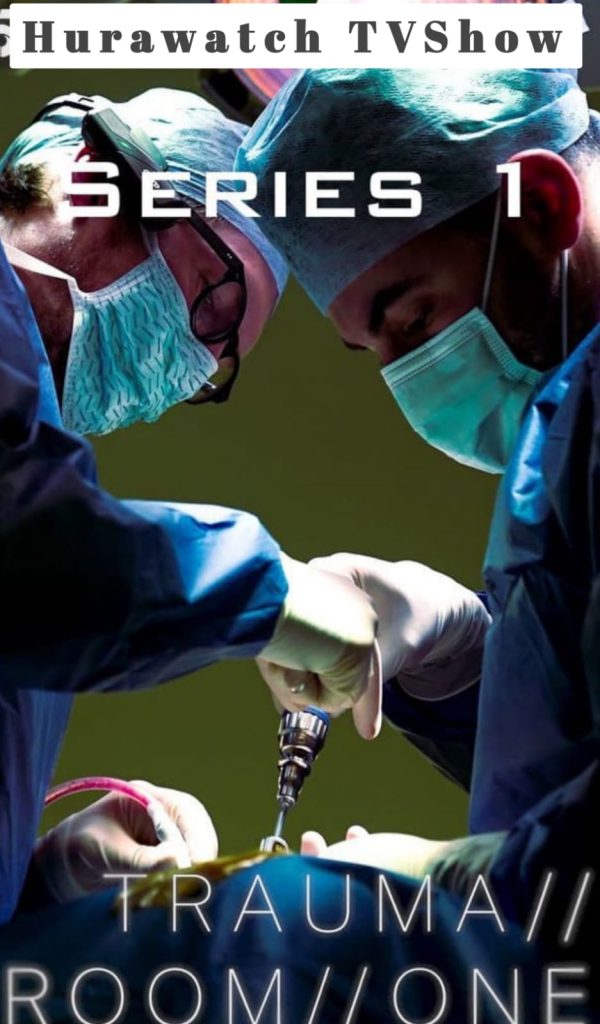
In addition to technical factors, the series focuses on human stories. The emotional narrative is made up of the experience of the patients, the worries of their family, and the commitment of the medical staff. The combination of science and human factors enables the audience to learn not only about the clinical issues but also about compassion and affection for handling the critical cases in a hospital environment.
Aspect Table
| Aspect | Details |
|---|---|
| Title | Trauma Room One |
| Release Date | 25 October 2023 |
| Country of Origin | United Kingdom |
| Genre | Documentary, Medical |
| Episode Runtime | 45 minutes per episode |
| Production Company | Renegade Stories |
| Cast | N/A |
| Format / Style | Observational medical documentary |
| Target Audience | Medical documentary fans, medical workers, general audiences |
| Tone | Informative, emotional, human-centered |
Plot
The documentary chronicles the day-to-day activities in the Walton Centre, which specializes in intricate brain and spinal surgery. The planning, execution, and post-operative care are featured in each episode, and they present the high stakes involved. The audience becomes familiar with the procedures, teamwork and technical accuracy that needs to be applied in all successful operations on changing lives.
The patient’s journeys are also highlighted in “Trauma Room One.” Cases are all placed in context, with stories of personal experiences, diagnosis, treatment choice, and recovery prognosis. It is a humanized way of medical practice, demonstrating the actual effect on the patients and their family, indicating the hard work and experience of the hospital personnel during the surgical operation.
Explore More Movies
- Tron Ares 2025
- Troll 2 2025
- Zootopia
- Wildcat 2025
- A Very Merry Beauty Salon
- I Swear 2025
- Give Me Back My Daughter 2025
- Where the Sun Always Shines 2025
- Locals Welcome 2025
- Civilisations Rise and Fall 2025
- Begonia 2025
- Second Guessing Fate 2025
- Anniversary 2025
- The Fantastic Four First Steps 2025
- The Correction Unit 2025
- Special Unit Murder First 2025
- Field of Screams 2025
- Greek Mothers Never Die 2025
- Holiday Touchdown A Bills Love Story 2025
- Chris Hemsworth Road Trip to Remember 2025
- The Hem 2025
- Kevin Hart Acting My Age
- Melt My Heart This Christmas
- The Age of Disclosure
- The Old Bachelor
- Time Travel Is Dangerous
- A Scottish Christmas Secret
- Agents un peu trop secrets
- Chainsaws Were Singing
- Con Job
- Finally Me
- I Am Curious Johnny
- It Was Just an Accident
- Jay Kelly
- Keeper
- KRZYK LOSING CONTROL
- Mayhem Girls
- My Sunshine
- Sisu Road to Revenge
- The First Murder Special Unit
Performances
Although it is a documentary, the professionalism of the medical team is a performance of some sort. Surgeons are extremely skillful and accurate, performing complex operations in a tense situation. There is co-ordination, communication and responsiveness among nurses and support staff that helps in a smooth workflow which is vital in high-risk scenarios.
The human factor is also very convincing. Patients are also usually nervous or anxious but show bravery and strength during the process of surgery. The relationships between the medical teams and patients are empathetic and trustful, so the observational performances are realistic and emotionally touching, providing the audience with technical expertise and personal attachment.
Direction and Screenplay
The direction balances the clarity and dramatic tension and shows surgeries in detail but understandable way. Camerawork, angles, and close-ups are modeled with a deliberate emphasis to both emphasize the technical complexity as well as emotional scenes, without violating the privacy and comfort of the patients.
The medical events are arranged in a logical order that gives context and flow to the events in the form of the so-called screenplay or narrative structure. The audience is led through the complicated processes of medical terminology and clear explanations by commentary and interviews. The editing is also done in a way that the story is easily followed, the clinical element is applied to it without sacrificing the flow and interest of the story.
Music
In Trauma Room One, music is quite subtle, and it is intended to support the emotional and tension without dominating the clinical information. The soft instrumental music is used to emphasize a time when a patient is contemplating something or when the surgery is awaited and it makes the operating theatre more humanized.
At the most intense surgical sequences, the music is minimal, the tension and realism are expressed by the natural sounds: beeps, equipment, and dialogue. All this adds to the immersion, which gives the documentary an emotional appeal without losing authenticity, and makes it deliver technical and human aspects in a way that is understood by the audience.
Themes
One of the central ones is the resilience of humans, both patients and medical staff. The show highlights how people face serious health issues and how they manage to be brave, trusting, and adapting to the situation. The technical accuracy of the procedures is matched by the emotional experience, which focuses on the power and the weakness.
The other theme is teamwork and expertise. Effective results rely on collaborative work of several professionals, which emphasizes cooperation, communication, and interdependence. The documentary highlights key issues of knowledge, training and moral accountability and the fact that medical accomplishments are a combination of ability, commitment and empathy.
FAQs
Conclusion
Trauma Room One offers an emotional, informative, and close-up view of the world of life and death brain and spinal surgery. The documentary showcases the proficiency, accuracy, and compassion needed in contemporary medicine through the integration of technical skills and patient-focused stories. The viewers are given unprecedented access to the processes which save and change lives every day.
The show strikes the right balance between realism and narrative involvement, through the use of direction, editing, and low-key music to establish a sense of immersion. Through a display of professional commitment and human strength, it is a powerful and educative documentary about transformative medical practice and thus should be viewed by anyone with an interest in medicine and human experiences.